JW Renders 2026 Portfolio: What CGI Interiors Actually Require
JW Renders’ 2026 portfolio makes the case for 3D architectural visualization and interior CGI as spatial communication — not photorealistic output alone.
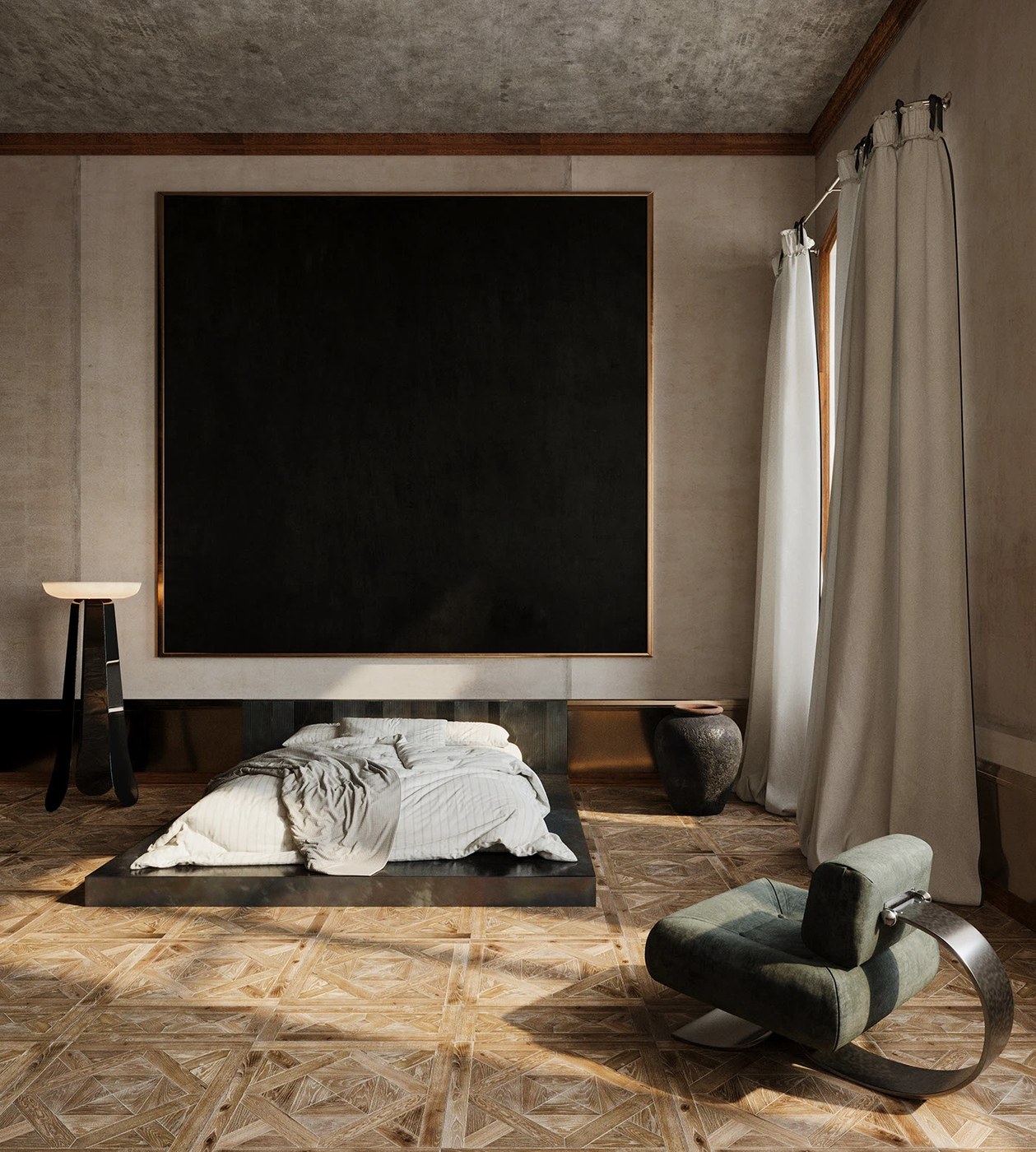
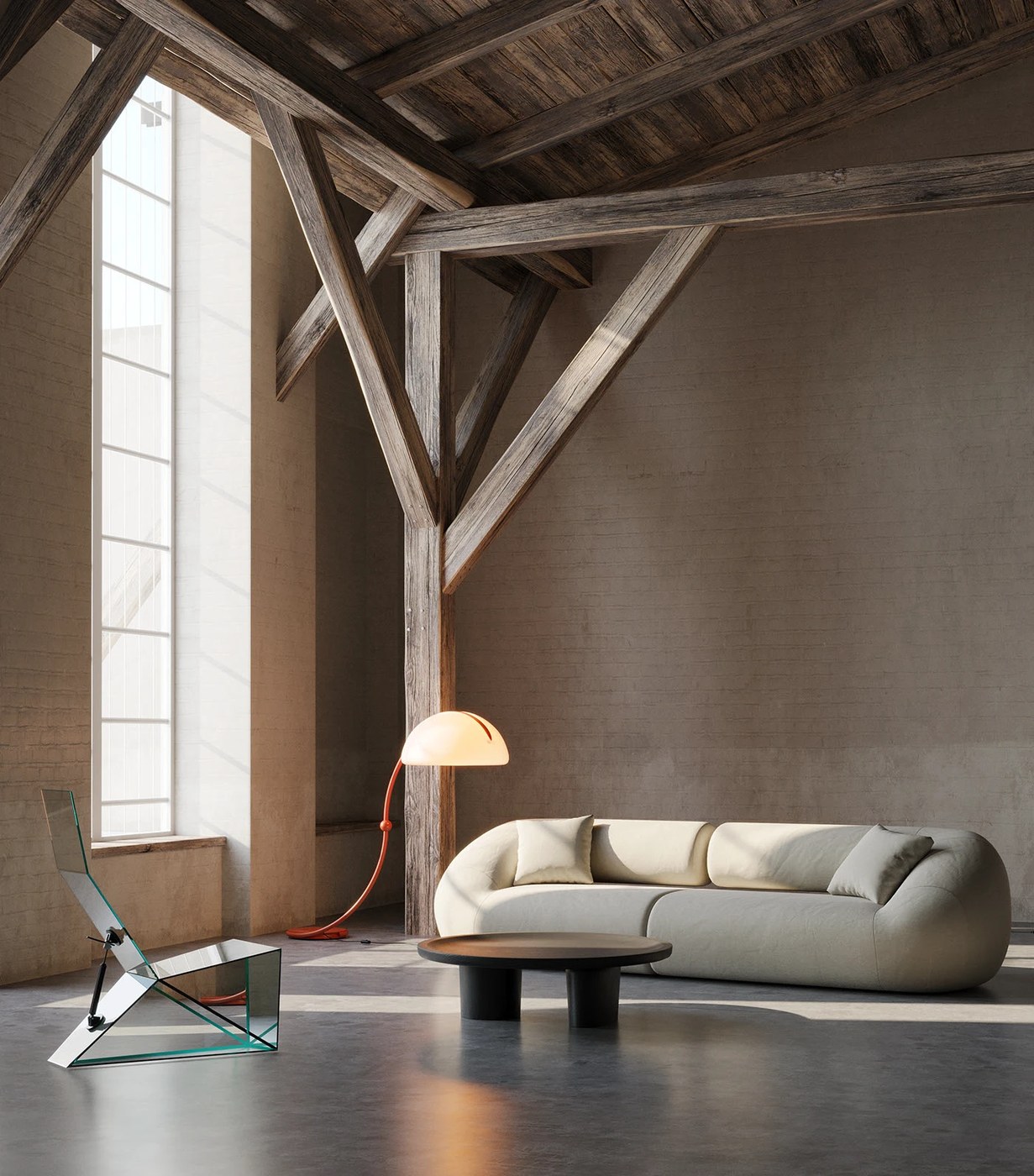
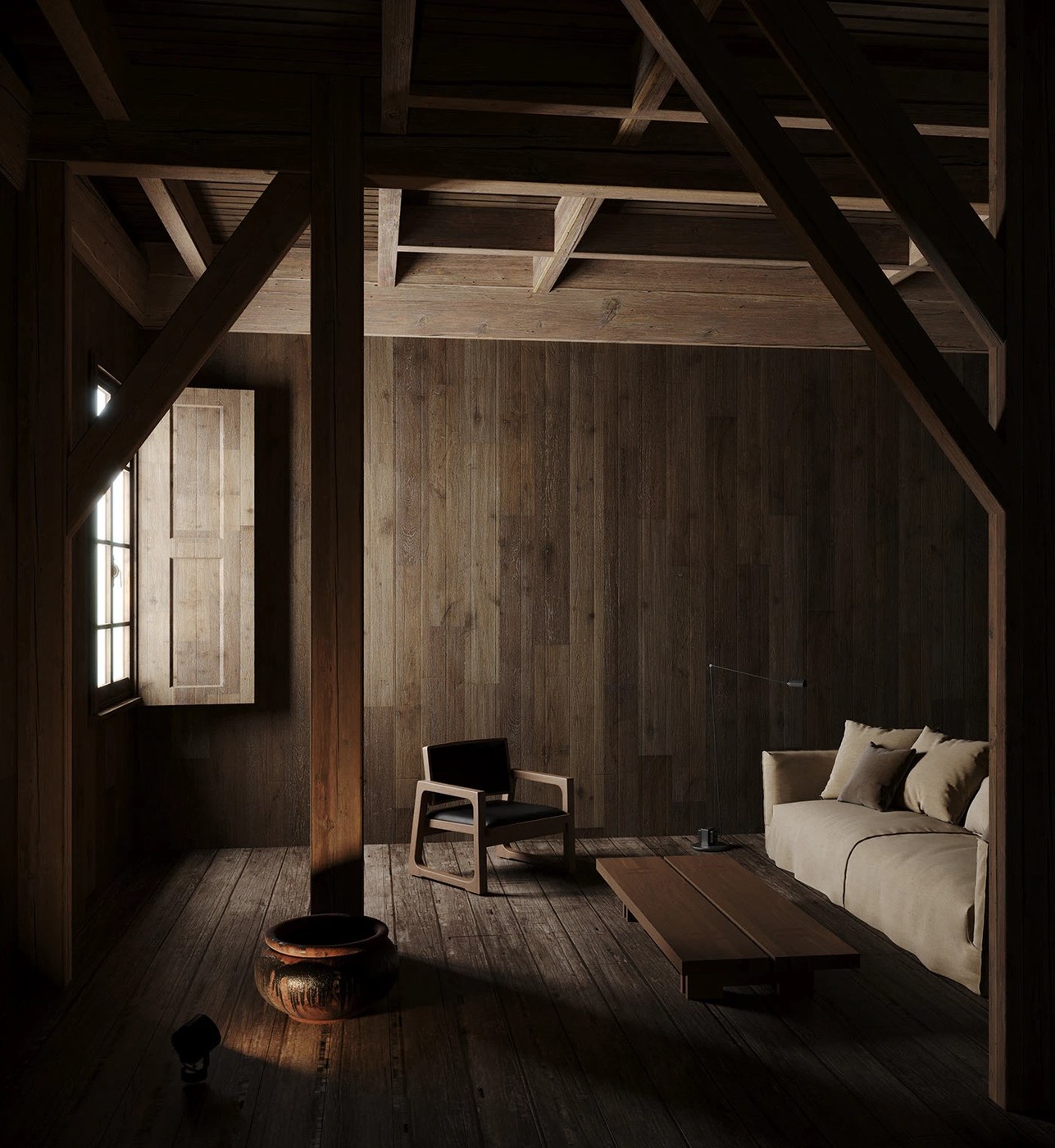
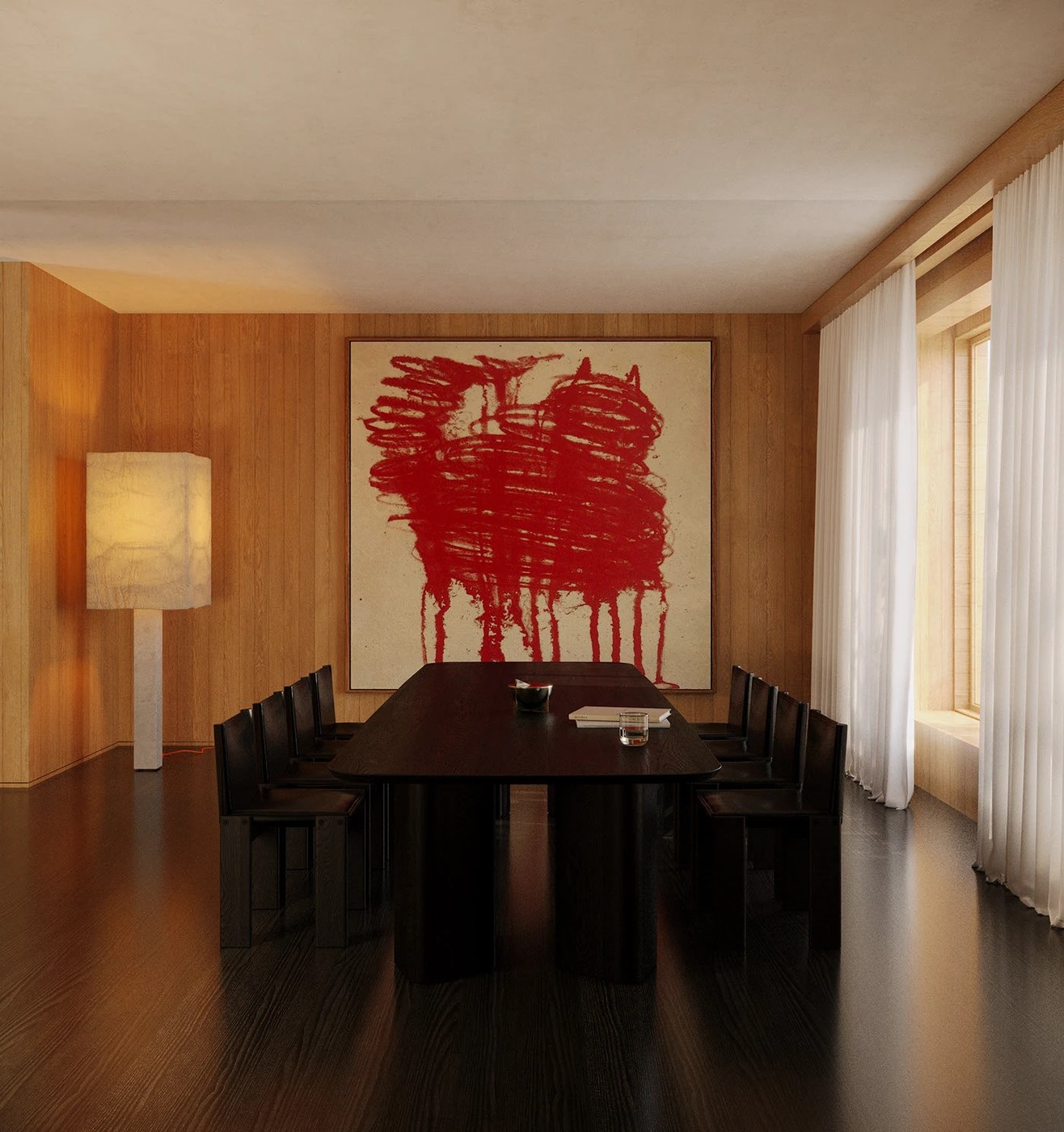
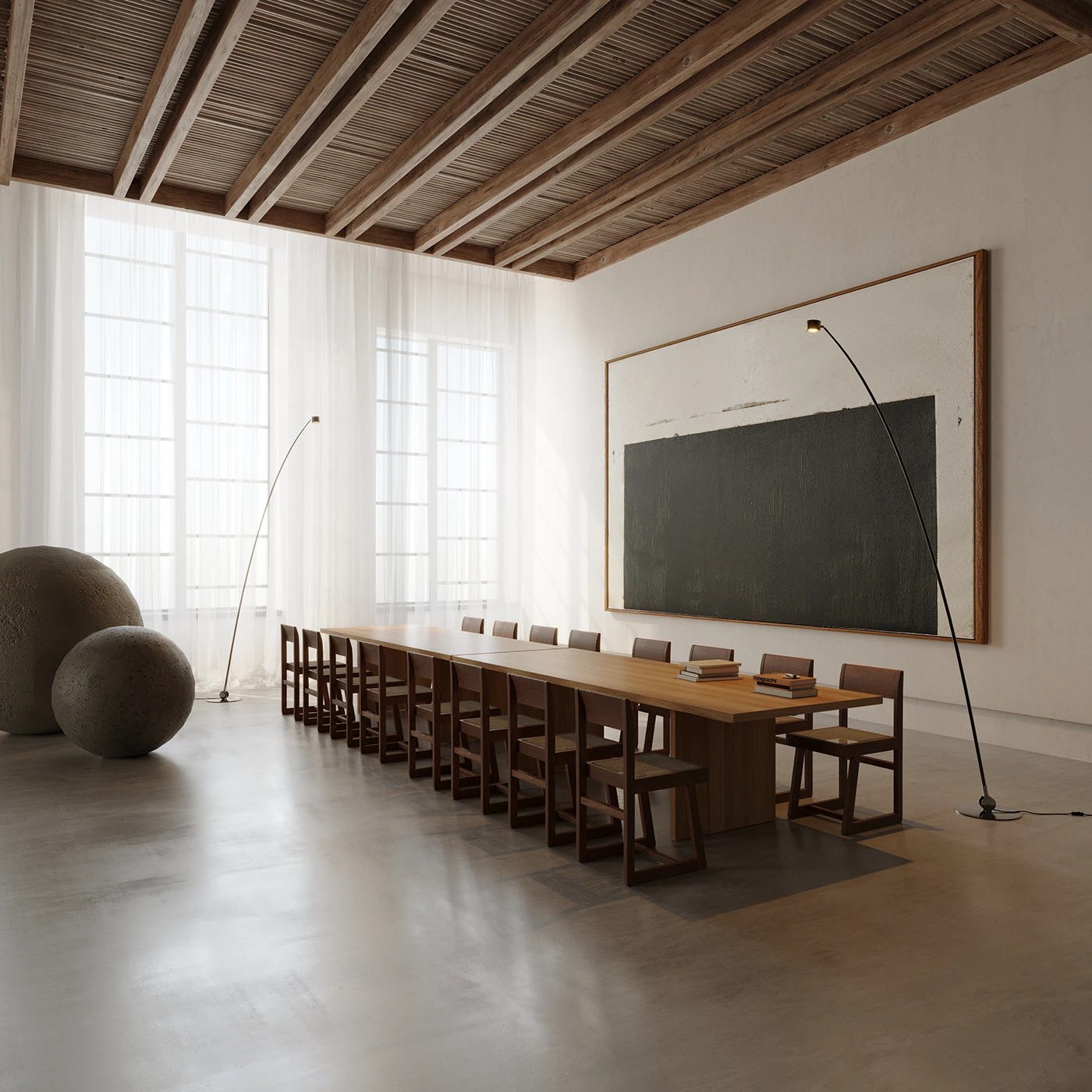
JW Renders — the Buenos Aires studio of Javier Wainstein — frames its practice around a specific distinction: architectural and design communication, not rendering. The 2026 portfolio selection shows what that framing produces in 3D architectural visualization interior CGI work. In one bedroom frame, a near-room-width black canvas reads as a void rather than decoration, and herringbone marbled tile covers every inch of floor — the composition makes an argument about weight and emptiness before anything reads as furniture. In the barn-loft sequence, a floor-to-ceiling industrial window blows out the left third of the frame in overexposed white light; a vintage orange-cord floor lamp becomes the warm counterpoint, the only other light source competing for the eye. In the timber barn scene, all surfaces share the same deep walnut tone — floor, walls, ceiling beams — and a narrow shaft of diffuse light through a shuttered window is the only element with enough contrast to function as a focal point. The dining room places a large gestural red painting, dripping brushwork and all, directly above a controlled walnut-paneled wall — the violence of the mark against the grain’s warmth is the entire spatial argument compressed into one wall.
CGI Interiors That Argue — JW Renders’ 3D Architectural Visualization Portfolio 2026
This is what separates 3D architectural visualization interior CGI that communicates from archviz that merely resolves. Camera angle, depth of field, material roughness — every technical parameter in the JW Renders 2026 portfolio is carrying a spatial argument, not just producing a convincing surface.
See the full project by JW Renders on Behance.